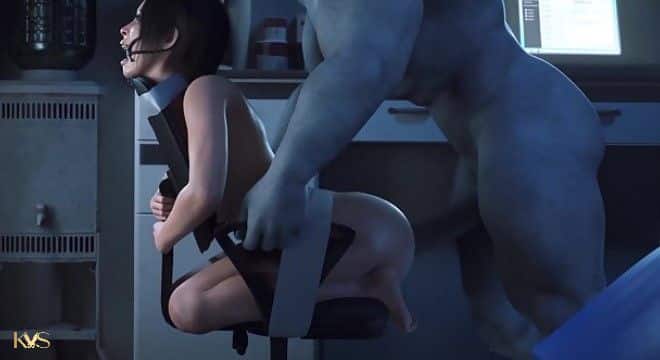
Sexual desire rarely fits inside the lines society draws for it — and few kinks make that clearer than teratophilia, the enduring human attraction to monsters.
This guide covers what teratophilia is, the psychology behind it, its long cultural history, how people explore it in practice, and whether it's something to be concerned about.
What is teratophilia?
Teratophilia (from the Greek teras, monster, and philia, love) is a sexual attraction to monsters, mythological creatures, or otherworldly beings. That might mean vampires, werewolves, aliens, tentacled sea creatures, or any being that exists outside the human norm. It sits within the broader Fantasy & Paranormal category of erotic experience — a space where imagination is the primary vehicle.
The attraction can show up as fantasy alone — daydreams, erotica, illustrated art — or it can be brought into the bedroom through roleplay and specialist toys. Either form is valid.
The psychology: why monsters?
Three distinct threads explain why teratophilia resonates with so many people.
Power and otherness
Monsters occupy a unique role in the imagination: they are powerful, outside social rules, and free from the ordinary pressures of human relationships. For some, the appeal is precisely the non-humanness — a monster operates on desire alone, uncomplicated by history, expectation, or judgement. This allows a fantasy of raw, unconstrained passion that a human partner, with all their real-world complexity, cannot fully embody.
Empathy and the outsider
A quieter thread in teratophilia is empathy. Monsters are typically coded as outsiders — feared, misunderstood, condemned by polite society. The story of Beauty and the Beast, the Hunchback of Notre Dame, and countless fairy tales before them tap the erotic charge of seeing past ugliness to find something true underneath. Being attracted to the rejected figure can be a form of radical acceptance.
Fantasy as a safe container
Sexual fantasy functions as a risk-free space to explore what arousal can look like when the constraints of reality are removed. Many people find that an attraction they would never pursue in real life — and that does not involve a real partner at all — lets them understand their desires more clearly. Research into human sexual fantasy, including work by Dr. Justin Lehmiller, consistently shows that imaginative and unusual scenarios are among the most commonly reported fantasy themes, even among people with otherwise conventional sex lives.
A brief cultural history
Teratophilia is not new. The Greek myth of the Minotaur — born of a queen's desire for a bull — is among the oldest surviving accounts of human-creature eroticism in the Western canon. Eighteenth- and nineteenth-century Japanese shunga art produced an entire genre of tentacle erotica, most famously Hokusai's The Dream of the Fisherman's Wife (1814), which remains one of the most reproduced erotic artworks in history.
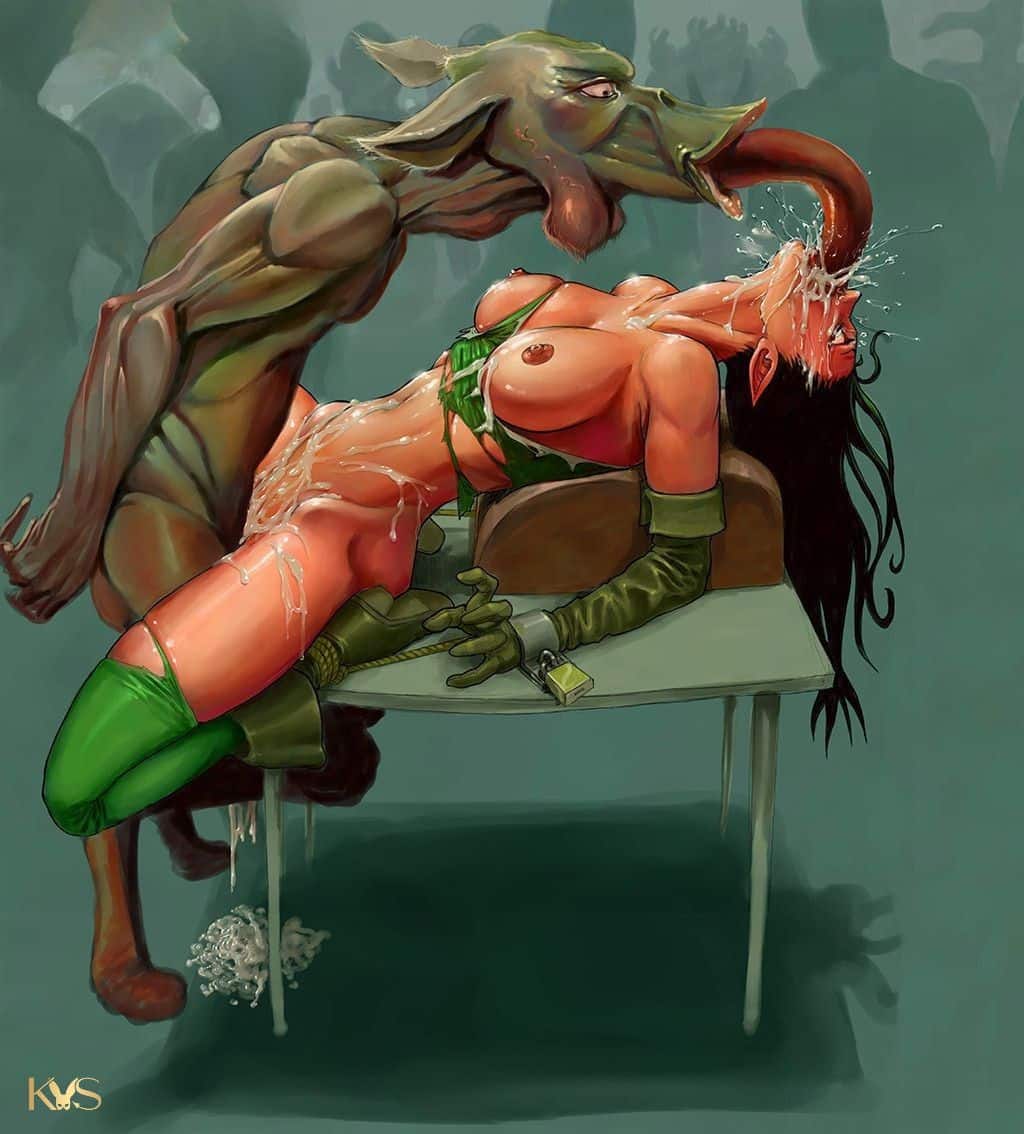
In the modern era, monster erotica has moved from the margins to mainstream visibility. Guillermo del Toro's The Shape of Water (2017) — an Academy Award-winning film centred on a woman's love for an amphibian creature — brought the aesthetic to mass audiences. Virginia Wade's self-published Bigfoot erotica franchise became a viral publishing phenomenon. Fan fiction and illustrated erotica communities on platforms like AO3 produce thousands of monster-adjacent stories each month.
The kink, in other words, has always been there. The internet simply gave it a place to gather.
Types and expressions
Monster fetish encompasses a wide range of specific attractions and formats:
Creature-specific fantasies
Vampires, werewolves, and demons have been erotic objects across literature for centuries — the vampire mythology in particular is saturated with desire, submission, and transgression. Aliens represent a different register: the ultimate otherness, attraction to something entirely non-human and potentially unknowable.
Tentacle erotica
Tentacle-based fantasies — creatures with multiple limbs that can explore the body in ways a human partner cannot — form one of the largest subgenres of monster erotica. The appeal often overlaps with bondage: the creature's limbs restrain and stimulate simultaneously, creating a fantasy of total envelopment.
Monster roleplay
Bringing teratophilia into real-world intimacy typically means partnered roleplay — one person embodies the creature (mask, costume, physical cues) while the other responds to the dynamic. The creature role can be dominant or, for people who enjoy taming a beast, submissive; the fantasy is flexible.
How to explore teratophilia
In solo fantasy and media
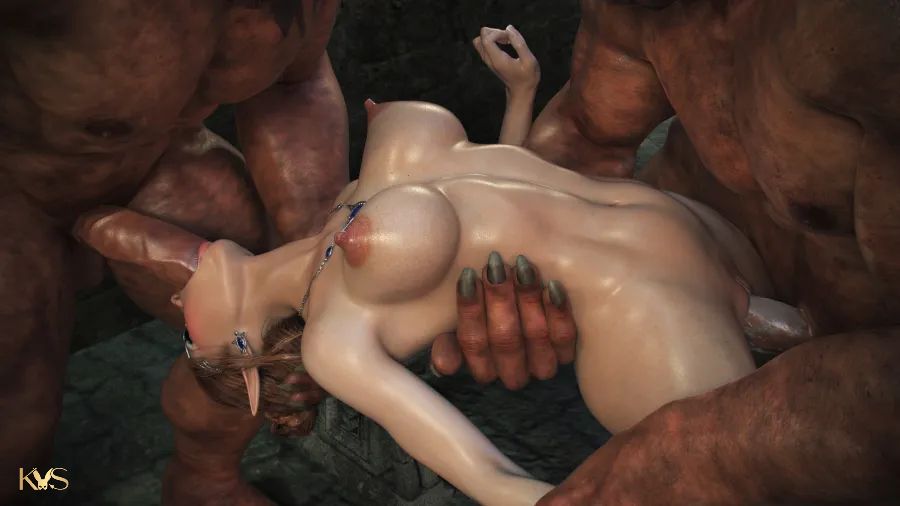
- Erotica and illustrated art. Monster erotica is a well-developed genre — written fiction exists across publishing platforms, and illustrated work from artists who specialise in the aesthetic is widely available on art communities online. This is the lowest-friction entry point.
- Animated and VR content. Animated monster content removes the uncanny-valley problem of live action and is produced at high volume. VR formats offer a more immersive version of the same.
- Ovipositor toys. For people specifically drawn to egg-laying or creature-insemination fantasies, purpose-built silicone ovipositor toys allow physical exploration of the fantasy. Start with smaller, body-safe options and use plenty of lubricant; never insert anything that is not designed for internal use.
With a partner
- Name it plainly. "I have a thing for monster fantasies — creatures, power, something not-quite-human" is enough to open the door. Most partners respond better to directness than to hints.
- Build a scene together. Decide which creature, what the power dynamic looks like, and what the limits are before you start. A safeword is useful even in fantasy-heavy play — arousal can shift quickly.
- Use costume as a cue, not a prop. A mask, a particular voice, textured gloves, or body paint can be enough to shift the register without requiring a full theatrical costume. The creature is mostly in the imagination anyway.
- Try roleplay frameworks. Monster scenarios often involve a version of consensual non-consent dynamics — a creature who pursues, captures, or overwhelms. If that element interests you, read up on CNC before building it into a scene so both partners are clear on what's fantasy and what's happening in the room.
- Debrief afterward. Intense fantasy roleplay can leave people in an emotionally heightened state. A few minutes of normal, warm reconnection — talking, touch, water — closes the loop. See the guide to aftercare.
Safety notes
Any play involving physical props — toys, ovipositors, restraints — requires the same care as comparable BDSM or toy-based play. Only use toys made from body-safe materials (medical-grade silicone, stainless steel, borosilicate glass). Establish a clear safeword. If anything causes unexpected pain or discomfort, stop and assess. Emotional intensity from deep fantasy immersion is real; build in aftercare time accordingly.
Is teratophilia normal?
Yes. The desire to eroticise the monstrous, the powerful, and the otherworldly is documented across cultures and centuries. It appears in ancient mythology, classical art, canonical literature, and modern fan fiction communities. Many people report monster-adjacent fantasies without ever having discussed them — not because the desires are shameful, but because there hasn't been language or community around them until recently.
A sexual fantasy — however unusual — that involves no real-world harm, no non-consenting person, and no compulsion is not a disorder. The Kinsey Institute notes that the range of human sexual fantasy is vast and that uncommon fantasy content is not, by itself, a clinical concern.
If the interest is causing distress or interfering with daily life, speaking with a sex-positive therapist is always worthwhile — not because the kink is wrong, but because distress deserves attention wherever it comes from.
Teratophilia reminds us that desire was never bound by the possible. Monsters live in the imagination precisely because that's where desire is most free.
— Samuel Davis
Related: Monster lovers often enjoy tentacle fantasies, ghostly spectrophilia, and the vore of vorarephilia.
Curious how monster fantasies sit among everything else you're drawn to? Take the 2-minute Kink Quiz →