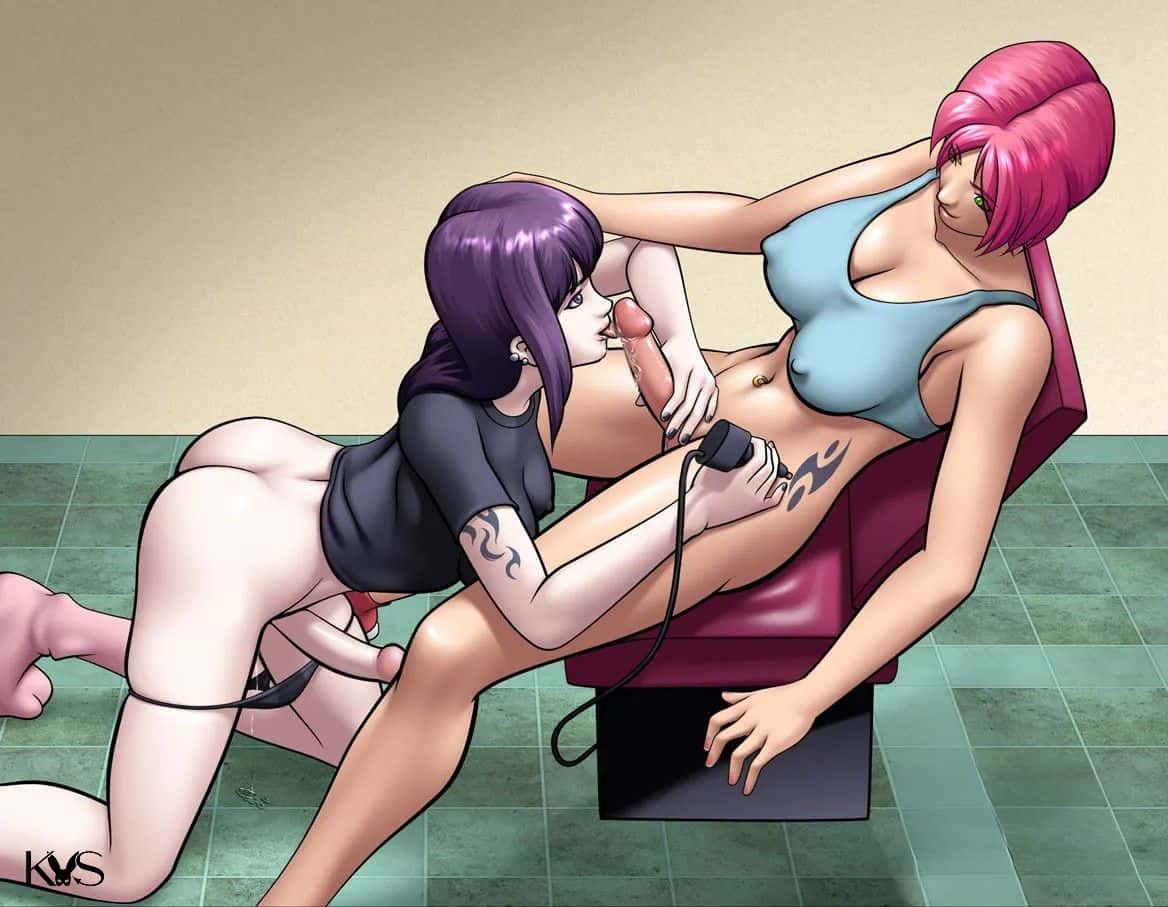
A futanari character combines an unmistakably feminine body with a penis — and for a significant slice of the internet, that combination is intensely erotic. If you have a futa fetish, you are very much not alone.
This guide covers what futanari actually means, the psychology of why the genre appeals, how it relates to real people (and crucially, how it doesn't), and practical ways to explore the fantasy — solo or with a partner.
What is a futa fetish?
A futa fetish is sexual arousal from futanari — a genre of erotic fantasy rooted in Japanese anime and manga that depicts female or feminine characters who also possess a penis, often alongside a vagina. The word futanari (二形) translates roughly as "of dual form" or "two kinds," and originally referred to intersex or gender-non-conforming people in Japanese; over time it became the label for this specific animated genre.
Futa characters are fictional by design. They typically feature exaggerated feminine traits — full figures, expressive faces, dramatic proportions — combined with male genitalia, sometimes multiple sets. The genre sits firmly within fantasy & paranormal erotica, at the intersection of dominance dynamics and pure imaginative escapism, which explains why it draws people from very different places on the sexuality spectrum.
The psychology: why does the futa fetish work?
 Attraction to futa content rarely has a single explanation. Most people who engage with it describe one or more of the following pulls:
Fantasy and escapism
Fiction lets us try things safely that would be impossible or off-limits in reality. Futanari's whole premise — a body that doesn't exist — is a permission slip for pure imagination. The appeal is not that you want this in the real world; it's that you want to be free of real-world constraints for a while. Many people report the genre functions as a mental reset valve, a space where the usual rules simply don't apply.
Gender-fluid eroticism
Futanari exists in a liminal space between conventional gender categories, and many fans find that liminality itself erotic. Desire doesn't always track neatly onto "straight" or "gay," and futa content provides an eroticized space where those labels temporarily dissolve. It's a common entry point for people who are bi-curious or questioning, not because the genre forces a label, but because it doesn't require one.
Dominance and penetration dynamics
A recurring theme in futa content is the futa character as the penetrating partner — assertive, powerful, often dominant. Many fans, including heterosexual men, describe the arousal as connected to submission fantasy: the idea of being taken by someone with both feminine energy and penetrating capacity. This links naturally to dominance and submission dynamics, where the futa character maps onto a powerful feminine dominant.
Double stimulation as pure fantasy
Some of the appeal is simply arithmetic: a character who can give and receive at once, who has "more" to offer, represents an imaginative surplus of sensation. Threesome fantasy works on the same logic — more simultaneous pleasure, more bodies in play. In futa content, one character contains that multiplicity.
Futa and real people: an important distinction
 This section matters: futanari characters are fictional, and that distinction is not optional.
Trans people are not futa characters
Trans women are real people with real identities. Fetishising or stereotyping a trans woman as a "real-life futa" is reductive and disrespectful. Trans identities are not fantasy genres — they are lived experiences. If you're interested in the futa aesthetic and want to explore it with a real person, that conversation starts with respect, explicit consent, and treating your partner as a whole human being, not a genre stand-in.
Intersex people are not futa characters
Intersex people — those born with sex characteristics that don't fit typical binary definitions — are also not fantasy archetypes. Futanari is a stylized, exaggerated fiction; intersex bodies are simply human bodies. Mapping a real person's anatomy onto an animated fantasy without their full and enthusiastic consent is harmful.
Where the genre lives
Futa fetish is at home in drawn, animated, or written fiction: hentai, manga, 3D animation, erotic fiction. It can also enter partnered sex through roleplay and prosthetics — but only with clear, enthusiastic, pre-negotiated consent from everyone involved.
How to explore your futa fetish

Solo: fiction and fantasy
The most common way people engage with a futa fetish is solo, through drawn or animated material. Hentai, manga, and 3D animation are all widely available. Some titles that have built followings in the genre include long-form manga series and illustrated short stories that mix character development with explicit scenes — searching with the term futanari on standard adult content platforms will surface options quickly.
Reading erotic fiction centered on futa scenarios is another low-barrier route, and many people find written material easier to personalise because the imagery lives in their own imagination.
With a partner: roleplay and prosthetics
If you want to bring the futa aesthetic into partnered sex, conversation comes first — always outside the bedroom, with no pressure and plenty of time to think. Frame it as a fantasy you'd like to explore together, not a request for your partner to become a character.
Practical options include:
- Strap-ons and harnesses — a partner can wear a strap-on that allows both penetrating and receiving. Many harnesses are designed for exactly this double dynamic.
- Prosthetics — realistic prosthetic additions exist for costume and intimate use. These require research into body-safe materials and correct fitting before use.
- Verbal and imaginative roleplay — you don't need props at all. Descriptive language and agreed-upon scenarios can carry the fantasy without any physical additions.
Whichever route you take, agree on a safeword before you begin, check in during play, and build in aftercare time afterward. Power-dynamic play — even in fantasy form — can leave people emotionally open once the scene ends.
What to say when negotiating this kink
- "There's a fantasy I'd like to share with you — no pressure, I just want you to know about it."
- "I find futa content arousing — it's about the fantasy of feminine dominance and dual anatomy. Would you be open to exploring something like that together?"
- "I want to make sure you're comfortable every step of the way. What feels like a good starting point for you?"
Clear, calm, low-stakes conversation is far more effective than hinting or hoping your partner figures it out.
Related kinks worth knowing

The futa fetish often overlaps with several adjacent interests:
- Dominance and submission — the futa-as-dominant dynamic maps cleanly onto D/s frameworks, where a powerful partner holds the active role.
- Pegging and strap-on play — the real-world equivalent of futa penetration dynamics, where a female or feminine partner takes the penetrating role.
- Gender play and crossdressing — interest in gender ambiguity and the erotic charge of combined masculine/feminine traits.
- Monster and creature fantasy — other fiction-based kinks where the erotic charge comes from non-human or impossible anatomy.
Is a futa fetish normal?
Yes. Attraction to fictional, genre-specific erotic content — whether that's vampires, supernatural beings, or futanari — is a form of fantasy engagement, not a clinical concern. The Kinsey Institute has documented for decades that human sexual fantasy ranges far beyond what any individual actually seeks in real life. Having a vivid or unusual fantasy life is normal; what you do with it determines whether it's healthy.
A futa fetish is healthy when:
- It stays clearly separated from your expectations of real people
- It isn't the only source of arousal and doesn't crowd out connection with actual partners
- It's pursued (if with a partner) with full consent and communication
- It brings pleasure rather than distress
If your fantasy life is causing distress or you find it's affecting how you see real people, speaking with a sex-positive therapist or experienced educator via NCSF is a reasonable step — not because the fetish is wrong, but because you deserve support that helps you feel good.
The futa fetish sits at the edge of what bodies can be, which is exactly why it works as fantasy. Good erotica has always lived in the impossible.
— Samuel Davis
Related: The art-driven version of this is futanari.
Curious how the futa fetish fits into your wider desire landscape? Take the 2-minute Kink Quiz →