The rope settles against skin, snug but not cruel, and something shifts — the body quiets, the mind narrows to the present moment, and the trust between two people becomes something you can almost feel. That is rope bondage at its best: physical sensation, psychological depth, and a kind of unhurried intimacy that is hard to find anywhere else.
This guide covers what rope bondage actually is, why people are drawn to it, how to start safely, and the foundational knots every beginner should know — judgment-free, safety-first.
What is rope bondage?
Rope bondage is the practice of restraining a partner — or being restrained — using rope, for erotic, aesthetic, or emotional purposes. It is the most developed form of bondage, and sits at the heart of BDSM and power exchange: one person (often called the rigger) ties, and one person (often called the bunny or bottom) is tied.
The range is enormous. At the simple end: a partner's wrists loosely bound to a headboard. At the elaborate end: the Japanese art of shibari, where symmetrical rope patterns flow across the body in visually striking designs. Most beginners land somewhere in between, and that is exactly the right place to start.
Why people are drawn to it
The appeal of rope bondage tends to cluster around a few core experiences:
- Surrender and trust. For the person being tied, giving up physical freedom to someone you trust can be profoundly releasing. The body stops having options; the mind follows. This kind of controlled vulnerability connects to the same psychological relief found in submission more broadly — and Dr. Justin Lehmiller's large-scale research on sexual fantasy consistently finds that bondage and restraint rank among the most widely shared erotic interests across all demographics.
- Presence and sensation. Rope creates constant physical feedback — pressure, warmth, slight restriction. Many people find that this narrows attention to the body in a way that is almost meditative. The outside world falls away.
- Aesthetic pleasure. Shibari in particular treats the bound body as a canvas. The patterns are beautiful, and being the subject of that attention tends to feel that way.
- Power and care in the same moment. For riggers, tying is an act of focus and responsibility. The attention required — checking tension, reading the person, adjusting in real time — creates a particular kind of intimacy that is hard to replicate any other way.
If you are curious about how rope fits alongside your other interests, the Kink Quiz can help map the territory.
Safety first — the rules that are not optional
Rope bondage is safe when approached with care and genuinely dangerous when it is not. Before you tie anything, internalise these:
Stop if you feel tingling or numbness. Both are signs of nerve or circulation pressure. Release the tie immediately. Lingering nerve compression can cause lasting injury — this is not a sensation to push through.
Never tie around the neck. No exceptions. Rope around the throat can restrict an airway or compress a carotid artery within seconds. If a collar dynamic appeals to you, use a purpose-made collar, not rope.
Never attempt suspension as a beginner. Partial or full suspension — where the tied person's weight rests on the rope — requires advanced skill, rigging knowledge, and specialised hardware. The consequences of a failure are severe. Learn floor-based ties for at least a year before considering it.
Keep safety shears within reach. Every session, every time. Medical-grade safety shears (also called EMT scissors) cut through rope in one motion. Know where they are before you start.
Never leave a tied person alone. Even a simple wrist tie can become dangerous if someone panics, shifts position, or has a medical episode. Stay present.
Agree on a safeword before you begin. A word that clearly signals stop everything now — "red" is the most common. Also agree on a signal for when someone's mouth is occupied: three taps in a row works well. The National Coalition for Sexual Freedom's safer sex and consent resources offer practical guidance on negotiating scenes and understanding consent within BDSM contexts.
What rope to use
Natural fibres are the standard for a reason. Jute is the traditional shibari material: it has texture that grips itself, feels warm against skin, and is easy to cut. Hemp is similar and slightly softer. Cotton is the most forgiving for absolute beginners — softer, cheaper, and widely available, though it can stretch under tension.
Avoid thin synthetic cord, paracord, or anything designed for non-bondage purposes. These can cut into skin under load and are harder to remove quickly in an emergency.
A good starter length is two or three 25-foot (7.5m) sections. That gives you enough to work with for basic ties without the confusion of managing too much rope at once.
Four foundational knots and ties
The single column tie
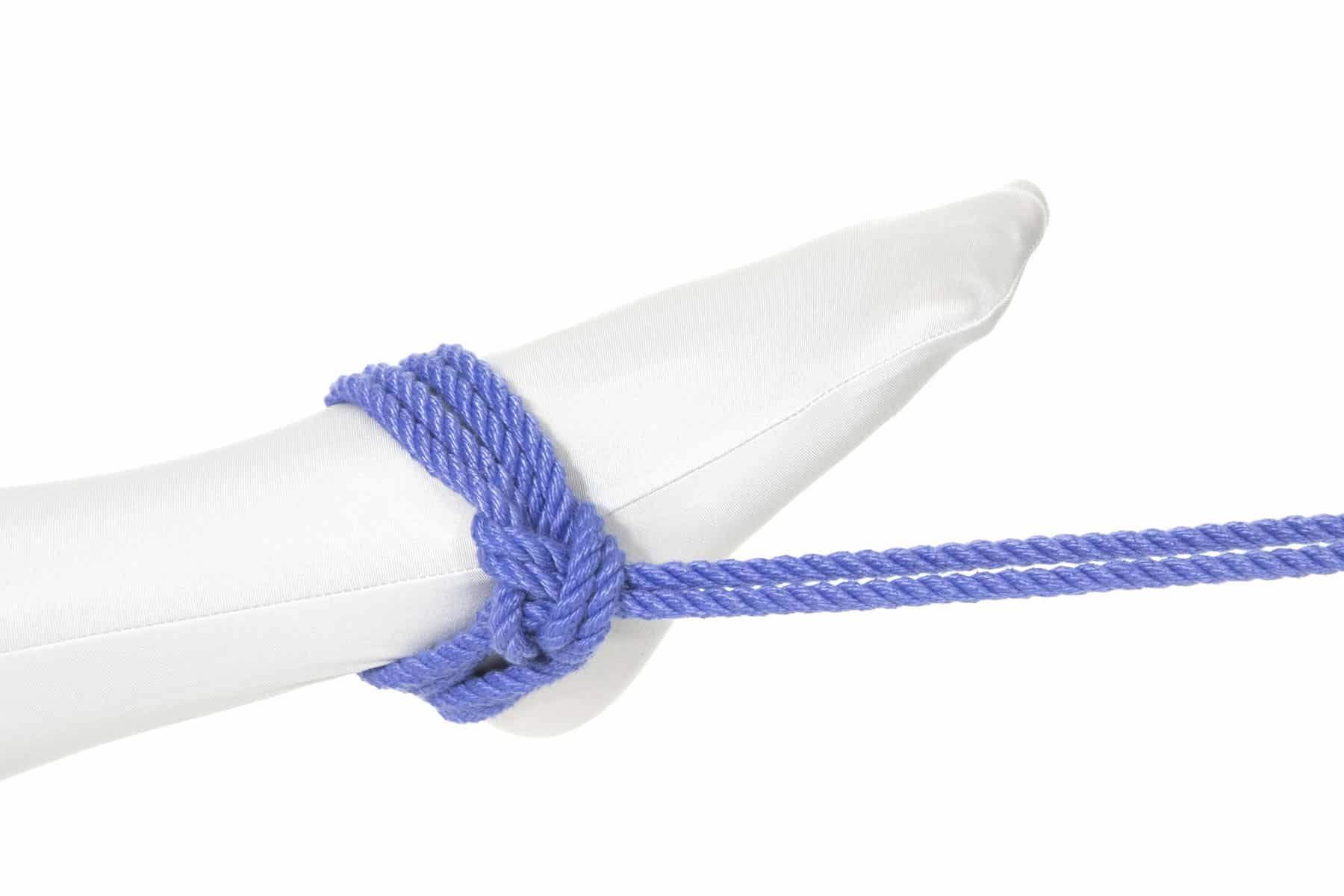
This is the building block of almost everything else. It creates a secure, non-tightening loop around one limb — wrist or ankle — that distributes pressure evenly and will not cinch down under tension. Practice it until it is automatic. Most beginner injuries come from improvised knots that cinch; a proper single column tie does not.
A working test: two fingers should slide under the finished tie without forcing. If they cannot, it is too tight.
The double column tie
The same principle applied to two limbs — both wrists, both ankles, or a wrist tied to a fixed point. It links two columns of rope cleanly and safely. The most common beginner use: wrists tied together in front of the body, which is low-risk and immediately effective for a simple restraint scene.
The chest harness
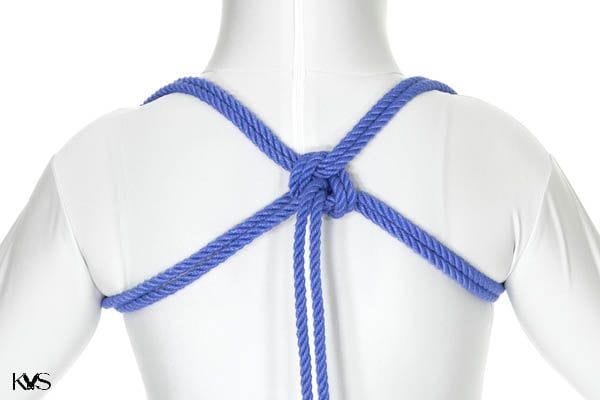
A rope wrapped around the chest — typically above and below the breasts, or across the upper torso — creates a harness that distributes pressure broadly and looks striking. It is the gateway to more complex shibari aesthetics. Keep wraps above the sternum loose enough that the person can take a full breath. Check regularly.
The lark's head knot
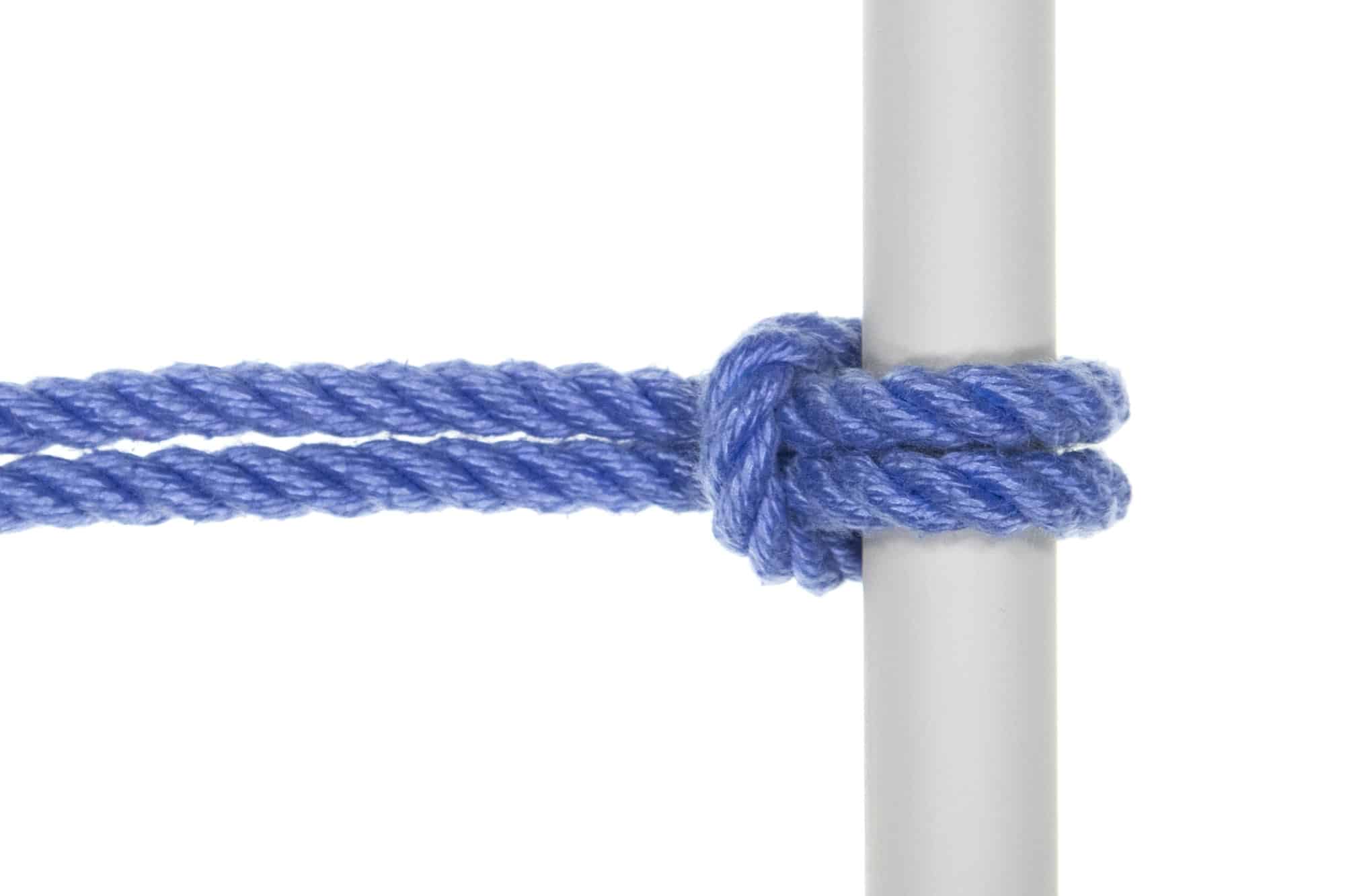
A simple, fast knot for attaching rope to an anchor point — a bedpost, a door frame attachment, a ceiling ring. It lies flat, does not slip, and is easy to release. If you plan to tie someone to furniture, learn this first.
Starting your first session
Practice on yourself first. Tie the single column tie on your own wrist ten times before you tie it on a partner. You need to know how it feels from the inside.
Talk before you touch the rope. Discuss what you want to try, what you want to avoid, safewords, and how you will check in during the scene. This conversation is not a bureaucratic exercise — it is genuinely part of the experience, and partners who skip it tend to have worse scenes.
Go slow. The first session does not need to be a full scene. Try a wrist tie, spend some time with it, then untie and talk about how it felt. Building skill and trust takes more than one afternoon.
Aftercare is part of the practice. After a scene, aftercare — checking in, physical warmth, reassurance — matters for both people. The person who was tied may feel emotionally tender or floaty; the person who tied may feel a sudden drop in energy or focus. Make time for it.
Where rope bondage sits in the wider picture
Rope bondage pairs naturally with dominance and submission dynamics — restraint is, at its core, an act of physical power exchange. It also layers well with impact play, sensory play, and primal kink, where the physical intensity of being held feeds the scene.
Shibari specifically has its own aesthetic community and learning culture: dedicated workshops, peer-to-peer mentorship, and a strong emphasis on technical skill before attempting more advanced techniques. If the art form draws you, seeking in-person instruction from experienced educators is the most reliable path forward.
The thing rope bondage practitioners consistently describe is this: you learn a great deal about a person by tying them, and a great deal about yourself by being tied. The rope is just rope. What passes through it — attention, trust, care — is the point.
Related: Rope connects to harness work, the rigger's art of rope topping, and the gear of a dedicated dungeon.
Curious how rope bondage fits alongside the rest of what you are drawn to? Take the 2-minute Kink Quiz ->