
A rigger holds the rope — and with it, the dynamic. In rigger BDSM, the person doing the tying is both craftsperson and dominant: responsible for every knot, every inch of tension, and the complete well-being of the person in their hands.
This guide covers what a rigger actually does, the roles involved, why rope bondage works psychologically, the main techniques, and how to begin safely — whether you want to tie or be tied.
What is a rigger in BDSM?
A rigger is the dominant partner in rope bondage — the one who ties. The term borrows from sailing, where the rigger manages the ropes on a vessel, and it fits: rope play requires the same careful attention to tension, load, and configuration. In the BDSM context, the rigger creates restraints, designs rope patterns, and maintains complete responsibility for their partner's physical safety and emotional comfort throughout a scene.
The person being tied is called the rope bunny, rope bottom, or rope sub. Together, rigger and rope bunny form one of the most trust-dependent dynamics in BDSM — a power exchange expressed not in words but in knots.
Rope bondage sits within the broader world of bondage and draws heavily from Japanese traditions. The practice has evolved into a discipline that spans pure restraint, elaborate artistic patterning, and meditative intimacy, depending on what the people involved bring to it.
The psychology: why rope bondage works

Photo Credit Paloma Piquet
Rope bondage is not just physical. It operates on several psychological levels at once — which is a large part of why it can feel so intense for both partners.
For the rigger
The dominant rope top gets a specific kind of satisfaction that other BDSM practices don't always offer: the satisfaction of craft. Rigging requires focus, spatial reasoning, and artistry. Many riggers describe being in flow — a state of total absorption — while they work. Alongside that creative engagement sits the responsibility of holding someone's safety in their hands, which deepens the power exchange meaningfully.
For the rope bunny
Being bound creates a particular quality of surrender. The rope bottom cannot move freely; they must yield and trust. Many people in this role report that restraint silences the thinking mind in a way that ordinary sex does not. Some drop into what the BDSM community calls subspace — a deeply relaxed, almost floaty state, similar in description to a runner's high, where stress and self-consciousness fall away.
The rope itself becomes a physical presence — constant, holding, neither punishing nor rewarding, simply there.
The relational element
Rope bondage also deepens intimacy. Negotiating a scene, moving through it together, and caring for each other in aftercare afterward creates a loop of trust that many couples describe as one of the most connecting experiences they share. The vulnerability required is extreme and, when met with skill and care, profoundly bonding.
Roles in rigger BDSM
The rigger (rope top)
The rigger leads the scene. Their responsibilities include:
- Designing and executing the tie safely
- Monitoring rope tension and the rope bunny's circulation throughout
- Reading their partner's non-verbal signals continuously
- Holding safety shears ready to release ties instantly if needed
- Leading aftercare at the close of the scene
Being a skilled rigger takes time. The technical demands are real: understanding anatomy (to avoid nerves and arteries), learning knot mechanics, and developing the spatial awareness to tie efficiently and safely. Experienced educators in the rope bondage community consistently emphasize that it is not a skill picked up in an afternoon.
The rope bunny (rope bottom)
The rope bunny's role is to receive the tie, communicate clearly, and trust the process. That sounds passive, but it requires active participation: staying present, voicing discomfort early, using safewords if needed, and developing the body awareness to distinguish between safe rope pressure and circulation warning signs (numbness, tingling, color changes in extremities).
Rope bottoms also contribute to the artistic and emotional quality of the scene — how they hold themselves in the tie, how they respond, what they communicate — shapes the experience for both partners.
Switches
Some practitioners move between roles: rigging one partner in one session, serving as rope bunny in another. Switching in rope bondage requires fluency in both skill sets and is generally more natural for people with significant experience in at least one role first.
Types of rope bondage

Photo Credit Paloma Piquet
Shibari and Kinbaku
Shibari — sometimes called Kinbaku — is the Japanese tradition that has shaped Western rope bondage most profoundly. It emphasizes aesthetic intention: the pattern of the rope, the geometry of the ties, and the emotional atmosphere of the scene are all as important as the physical restraint.
In traditional Kinbaku, the tie communicates something between the partners — tension, vulnerability, beauty — in a way that other bondage styles don't always pursue. Practitioners of Shibari often spend years studying specific ties and studying under experienced teachers.
Suspension bondage
Suspension bondage takes rigging to its most technically demanding level: the rope bottom is lifted fully or partially off the ground. This requires:
- Thorough knowledge of load-bearing anchor points
- Advanced understanding of how weight distributes across rope
- Experience reading how a body moves under tension when unsupported
- Immediate access to release tools
Suspension is an advanced skill. Most experienced educators recommend years of ground-work before attempting any partial or full suspension. The risks — nerve damage, joint injury, falls from failed anchor points — are serious and real.
Decorative and artistic bondage
Not all rope bondage involves restraint in the functional sense. Some practitioners use rope purely as a visual and tactile medium: creating elaborate patterns on the body that are beautiful to look at and feel, without tying the person in place. This style is common in rope bondage photography and performance art, and often prioritizes aesthetics over constraint.
Self-rigging
Self-rigging — tying oneself — has grown in popularity as a solo practice. People use it for sensory focus, as a meditative practice, to enhance masturbation, or simply to develop their technique before working with a partner. It is also the highest-risk form of rope play, since there is no second person present to release a tie or respond in an emergency. Anyone practicing self-rigging should keep safety shears within reach and understand exactly how to escape every tie they apply.
How to explore rigger BDSM: practical steps

Photo Credit Smutty Rogue
1. Research before you touch rope
Before handling rope with a partner, spend real time learning. Read widely, watch technique videos from established rope educators, and — where possible — attend in-person workshops. The National Coalition for Sexual Freedom (NCSF) maintains resources on BDSM education and community events where beginners can learn in person from experienced practitioners.
Understand the anatomy you're working with: know where major nerves run (the radial nerve is particularly vulnerable in arm ties), which positions risk compressing arteries, and how to spot early circulation warning signs.
2. Choose the right rope
Rope material matters. Common choices:
- Hemp and jute — traditional, have enough friction to hold knots well, warm against skin; popular for Shibari
- Cotton — softer, good for sensitive skin or beginners, slightly less grippy
- Nylon and polyester — durable but slippery, harder to secure; generally not recommended for beginners
Start with 6–8mm diameter rope in 8-metre lengths. Natural fibre rope (hemp or jute) is often recommended as the starting point because its texture helps beginners feel how the rope is sitting.
3. Learn foundational knots first
Master the single column tie and the double column tie before anything else. These two ties form the basis of the vast majority of bondage configurations. Practice them on yourself, on a pillow, on a piece of furniture — get them automatic before you practice on a person.
The rule most experienced riggers give: if you cannot tie a knot smoothly and confidently, it is not ready for a partner.
4. Negotiate the scene thoroughly
Before any scene, discuss:
- Limits — what is off the table, what is uncertain, what is enthusiastically wanted
- Health information — circulation issues, nerve conditions, joint problems, recent injuries, medications that affect sensation
- Safewords — verbal (the traffic-light system — green/yellow/red — works well) and non-verbal (a tap or a dropped object for when a mouth is occupied)
- Duration and intensity — how long, how tight, what activities might accompany the tie
This conversation is not a bureaucratic formality. It is the foundation the scene is built on, and it is how both people arrive able to relax into the experience rather than manage anxiety about it.
5. Keep safety tools within reach at all times
Every rope bondage scene requires:
- Safety shears (EMT scissors) — positioned where the rigger can reach them instantly
- A plan to release the tie quickly in any configuration used that session
- A clear understanding of what to do if the rope bunny shows circulation warning signs
The moment a rope bunny reports numbness, tingling, loss of sensation, or color change in their extremities, stop and release the affected tie immediately. Nerve compression injuries can occur quickly under rope; most resolve with prompt release, but serious damage is possible if warning signs are ignored.
6. Aftercare is part of the scene
Rope bondage — particularly longer or more intense sessions — leaves the body and nervous system in a changed state. Many rope bottoms experience drop in the hours or days after a scene: emotional vulnerability, tearfulness, or low energy. This is a recognized pattern in the BDSM community.
Quality aftercare closes the scene properly: check the rope bunny's skin for marks or irritation, offer water and warmth, sit with them until they feel fully grounded, and follow up in the days afterward. The rigger can also experience their own form of top drop. Both people deserve attentive care at the close.
Is rigger BDSM normal?
Yes — and the community around rope bondage is one of the more skill-oriented, safety-conscious spaces in BDSM. Many practitioners treat it as a discipline: they study, practice, teach, and continue learning throughout years of involvement.
As a practice that involves real risk, it requires more preparation than many other kinks. But the people who take that preparation seriously consistently describe rope bondage as among the most intimate and rewarding experiences they engage in.
The NCSF notes that consensual kink, practiced with informed participants, is a recognized expression of sexuality — not a disorder, not a red flag, and not something that requires clinical concern. What matters is consent, skill, and care — all of which rigger BDSM demands and, done well, delivers.
Rope bondage taught me that dominance isn't about force — it's about precision. The most powerful thing I do as a rigger is pay total attention to the person in my hands.
— Ann-Marie D'Arcy-Sharpe
Signs you might be drawn to rigger BDSM
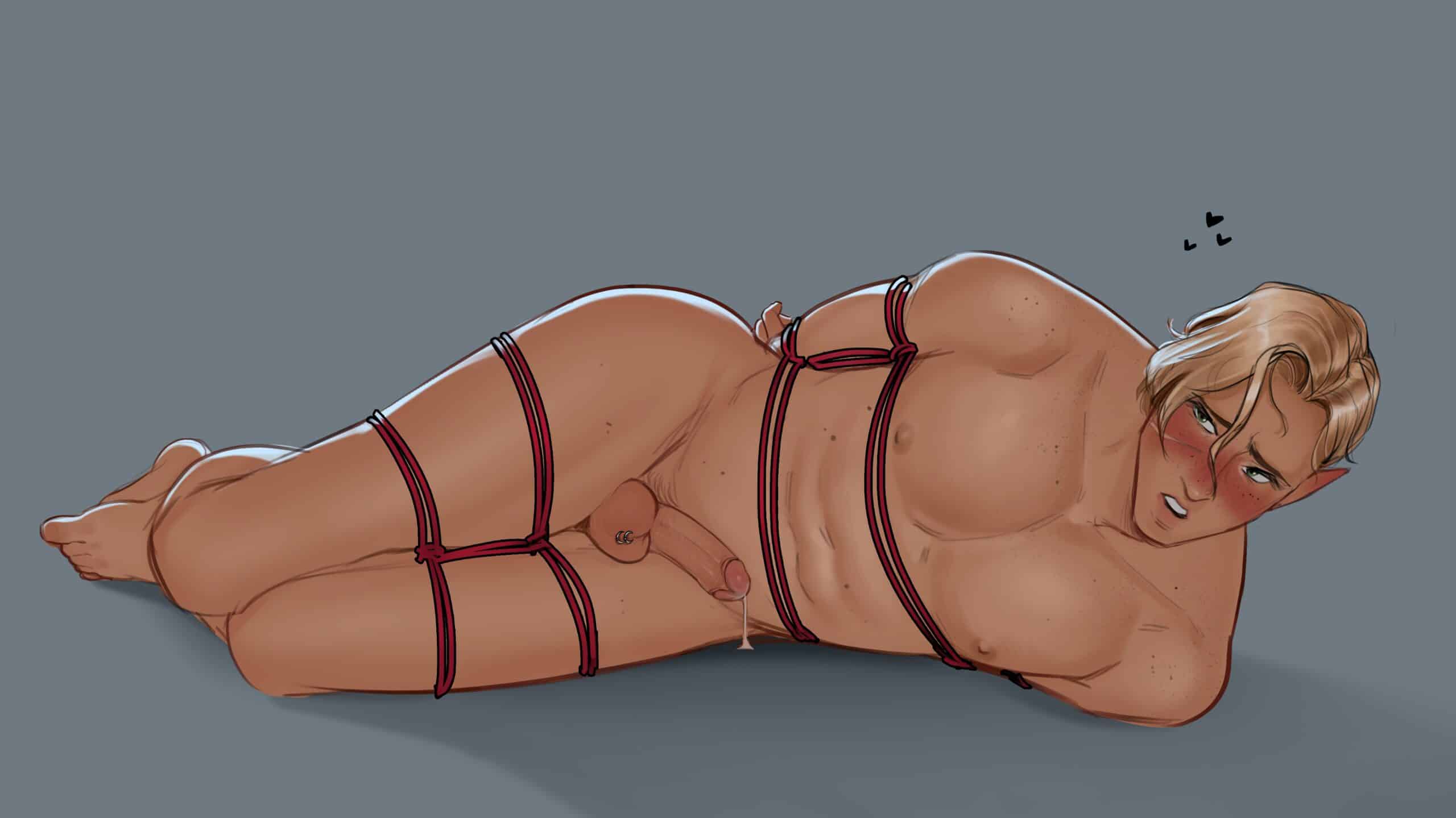
Photo Credit Smutty Rogue
As a potential rigger:
- You're drawn to craft, precision, and doing things well
- The idea of having a partner completely in your control — and completely trusting you — is deeply appealing
- You like dominance dynamics and want to express them through something physical and artistic
- You're patient and genuinely enjoy learning technical skills
As a potential rope bunny:
- The idea of physical restraint feels freeing rather than frightening
- You want to surrender control completely to a partner you trust
- You're drawn to submission and want to experience it in a total-body way
- Being held — even through rope — sounds like what you need
If you recognize yourself in either list, there's a whole practice waiting to be explored — but start with the learning, not the rope.
Curious how rigger BDSM fits into the broader map of your desires? Take the 2-minute Kink Quiz →