Some people drop into subspace through pain or restraint. Others get there by becoming something altogether simpler than a person.
Pet play is one of the most psychologically rich kinks in the power-exchange world — and one of the most misunderstood. This guide covers what it actually is, why it works, the main types, how to start, and how to keep everyone safe when the headspace goes deep.
What is pet play?
Pet play is a consensual roleplay & age play kink in which one or more participants take on an animal persona — most often a puppy, kitten, or pony — while a partner acts as owner, handler, or trainer. The dynamic is built on the same foundations as dominance and submission: trust, negotiated power, and a shared fiction that both people invest in fully.
What makes pet play distinctive is the depth of the persona shift. Unlike straightforward role-play, good pet play involves genuinely inhabiting the animal headspace — moving, communicating, and responding as the animal would. The "pet" often stops using human language entirely. The owner or handler provides structure, care, commands, and reward. The relationship between them is the whole point.
Pet play can be entirely non-sexual — many practitioners value it purely as escapism and stress relief — or it can be woven into explicitly erotic scenes. Most people find their own balance, and that balance can shift session to session.
How pet play fits into BDSM

Pet play sits inside the broader landscape of power exchange and dominance and submission. The owner holds authority; the pet surrenders it. That structure maps cleanly onto a Dom/sub dynamic, and many people who practise pet play also identify as submissive outside of it.
The difference from generic D/s is the animal frame. Being a pet gives the submissive a specific, boundaried identity to inhabit — one that carries its own logic (pets don't manage spreadsheets, pets don't overthink) — which can make it easier to let go than a more open-ended submission. For many people, this kind of structured escapism eases anxiety and enhances feelings of connection between participants — a pattern consistent with Dr. Justin Lehmiller's research on sexual fantasy and role-play, which found that scenarios involving power exchange rank among the most commonly reported fantasies across diverse populations.
It is worth distinguishing pet play from the furry community. Furry culture centres on anthropomorphic characters with full human personalities and detailed lore; pet play centres on the owner-animal dynamic and the headspace that comes with it. The two overlap occasionally — some people are both — but they are not the same thing.
Types of pet play
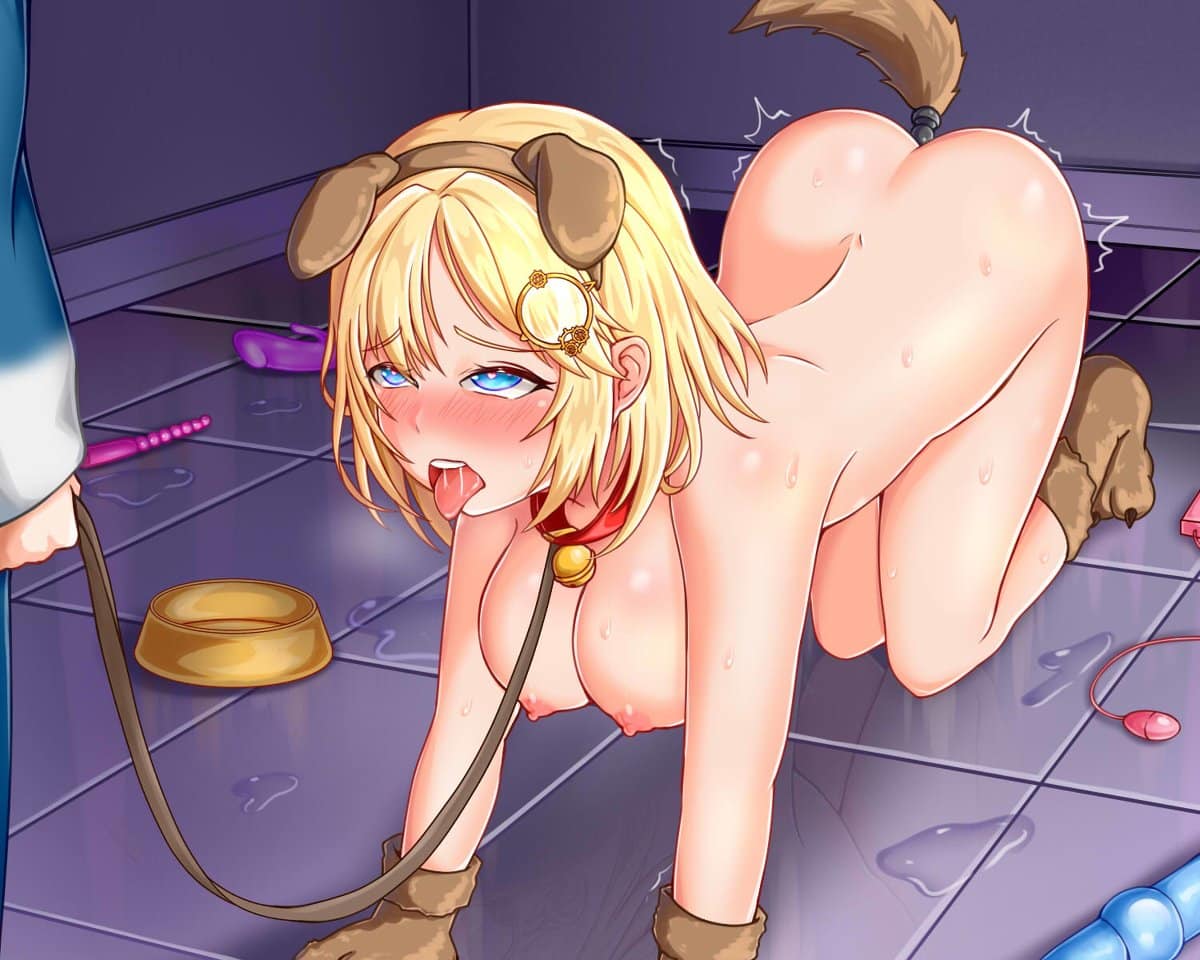
The animal you choose shapes the whole dynamic. Here are the most common:
Pup play is the largest and most organised subculture within pet play. Puppies are playful, loyal, and eager to please — the pup headspace tends to be warm and high-energy. Pup play has its own gear culture (hoods, mitts, tails) and a visible presence at BDSM events worldwide.
Kitten play leans into the cat's independent streak — affectionate on their own terms, occasionally brat-adjacent (see brat dynamics), and deeply sensual. Kittens may or may not follow commands, which gives the dynamic a built-in tension that many owners enjoy.
Pony play is among the most visually elaborate forms. Ponies are trained rather than simply kept: dressage, pulling a cart, performing. Gear often includes bridles, bits, hoof boots, and plumed harnesses. The training element makes pony play feel closer to impact play and discipline scenes than the softer end of the spectrum.
Other animals — foxes, bunnies, wolves, bears, cows — each carry their own archetypes. Fox play tends toward cunning and mischief; wolf play toward primal instinct (it overlaps with primal play); cow play sometimes incorporates elements of breeding kink or milking dynamics.
Why pet play works: the psychology

Three things tend to drive the appeal:
Escapism. Being a person is demanding. Being a pet is not. The animal headspace strips away the cognitive load of adult identity — no decisions, no performance, no ego management — and replaces it with something genuinely simple. For many practitioners this is the core of the kink, and the erotic dimension is secondary.
Power exchange. The owner-pet structure creates one of the clearest versions of consensual control in kink. The pet depends on the owner for food, direction, and affection; the owner carries full responsibility for the pet's wellbeing. That mutual investment tends to build intimacy quickly.
Sensory and embodiment play. Moving on all fours, wearing a collar and leash, communicating through sound rather than speech — these are visceral, physical experiences that pull people out of their heads and into their bodies. Gear helps: the weight of a collar, the texture of mitts, the resistance of a leash are constant tactile reminders of the persona.
Getting started in pet play

1. Choose your animal and talk first
Pick the animal that feels right, then have a real conversation before anything else: what does the pet persona mean to you, how deep do you want to go, what is and is not on the table sexually, what does discipline look like if you want it, and what does good care from the owner look like? This negotiation is not a formality — it is where the best scenes are built.
2. Start with simple gear
You do not need a full pup hood on day one. A collar and leash are enough to establish the dynamic. Add animal-ear headbands, paws or mitts, or a tail attachment once you know what you enjoy. Gear deepens immersion; it is not a prerequisite.
3. Establish a safeword or signal
Even in pet play, where the pet may be communicating only in animal sounds, there must be a clear way to pause or stop the scene. A tap-out signal (three taps on the floor), a specific sound, or returning to a human name all work. Agree on it beforehand and respect it instantly.
4. Use reward and care inside the scene
Good owner behaviour includes commands, praise, play, and discipline — but always with an undercurrent of genuine affection. Rewarding good behaviour with praise, treats, or petting makes the pet headspace feel held and safe, which is what allows it to go deeper. If your pet has a degradation kink and wants something harsher, that is a separate negotiation to have beforehand.
Safety: what owners and pets need to know

Physical safety in pet play is practical and specific:
- Collars must fit properly. A collar should allow two fingers between the collar and the throat. If the pet is moving on all fours with a leash attached, a harness is almost always safer than a neck collar — it distributes pressure across the chest instead of the trachea.
- Hoods and muzzles require active monitoring. If you use a full pup hood or breath-restricting muzzle, the owner must be watching the pet's breathing and distress signals constantly. Never use restrictive headgear unsupervised or when the owner is impaired.
- Knees and joints. Extended time on all fours is harder on the body than it looks. Padded knee pads, cushioned mats, or soft flooring reduce wear. Check in on joint comfort regularly, especially in longer scenes.
- Play space. Scan the area for sharp edges, hard corners, or anything a person moving at floor level might not notice.
Psychological safety matters just as much. Pet play can carry people into a very deep altered state — sometimes called "petspace" or "pupspace" — that feels disorienting to come out of. That drop is not a problem; it is a sign the dynamic worked. What it requires is deliberate aftercare.
Aftercare for pet play headspace
Aftercare after pet play deserves particular attention because the persona shift is so complete. Coming back from being a pet is not like coming back from impact play — it is a full identity re-entry, and it can feel abrupt and vulnerable.
Good aftercare for pet play includes:
- Physical transition signals — removing gear slowly and deliberately marks the end of the scene. Let the pet decide the pace.
- Warmth and contact — a blanket, a hold, skin contact. The nervous system often needs settling after deep headspace.
- Verbal reconnection — speaking to each other as people, using given names, checking in about the experience in human terms.
- Time — plan for at least twenty to thirty minutes of aftercare after an intense session. "Drop" — an emotional low that follows an intense scene — can be delayed by hours. Text check-ins the following day are a good habit.
For a deeper look at recovery after intense scenes, see the guide to aftercare.
Is pet play normal?
Yes. Pet play is one of the more widely practised dynamics in BDSM communities worldwide, with dedicated events, online spaces, and a gear industry built around it. It is not a disorder, a symptom of anything, or a red flag. Like any kink, it is healthy when it is consensual, negotiated clearly, and practised with care for everyone involved — principles outlined in the National Coalition for Sexual Freedom's consent and advocacy resources.
The fantasy of being owned and cared for — or of owning and nurturing something that fully depends on you — is not strange. It is deeply human. Pet play just gives it a very clear, very embodied form.
Pet play is not about wanting to be an animal. It is about the relief of being something simpler than a person, held by someone who chose to hold you.
— Samuel Davis
Related: Pet play shares a community and aesthetic with the furry world.
Wondering where pet play fits in your wider kink landscape? Take the 2-minute Kink Quiz →