The submissive who rolls their eyes at a command, smirks, and says "make me" — and means it as an invitation — is a brat. And finding a dominant who rises to the challenge is the whole game.
This guide covers what brat kink actually is, the psychology behind it, the difference between a brat and a brat tamer, how to explore it step by step, and what makes it distinct from other forms of BDSM.
What is a brat kink?
Photo: Smutty Rogue
A brat kink is a consensual BDSM power dynamic in which the submissive partner — the brat — deliberately disobeys, teases, and provokes their dominant partner, the brat tamer. Rather than quiet, obedient submission, the brat's pleasure comes from resistance: backtalk, eye-rolls, mock refusals, and playful defiance that beg the dominant to reassert control. If you're drawn to the submissive side of power exchange but want a gentler or more straightforward starting point, see how to be submissive.
It lives squarely in the BDSM universe, alongside more familiar structures of dominance and submission. What sets it apart is tone. Bratting is inherently playful — the "disobedience" is a mutual game, not genuine disrespect. The brat isn't trying to opt out of the dynamic; they're doing the opposite, using mischief as a way to provoke the reactions they crave.
The term "brat" in ordinary life sounds like an insult. In kink, it's a role, and often a badge of honour.
Why do people enjoy brat kink?
Photo: Smutty Rogue
For many people, the brat role is less a performance and more a permission — a sanctioned space to express a naturally feisty, teasing personality that gets suppressed everywhere else. A few distinct draws emerge consistently:
It's an active form of submission
Traditional submission can feel passive. Bratting is anything but. The brat is constantly engaged, reading the room, calibrating provocations. Many people who feel uncomfortable simply "waiting to be told what to do" find that brat play gives their submission an outlet that feels like them.
The funishment payoff
The brat's goal is rarely to escape punishment — it's to earn it. Funishment is the word community members use for consensual discipline that is the point, not the penalty. A well-timed spanking, bondage, forced orgasms, or a stern reprimand can feel like the reward for all that mischief. The bratting is the foreplay.
Tension and release
Brat dynamics thrive on the pleasure of escalating tension — will the dominant take the bait? How long will they hold out? How will they finally respond? That push-and-pull builds an erotic charge that straightforward compliance doesn't generate.
Attention and connection
Some brats identify honestly: they want their dominant's attention, and bratting is the surest way to get it. Testing a partner through playful defiance and watching them rise to it without losing composure is, for many people, a form of intimacy that builds trust more than it strains it.
It's lighter than it looks
Brat kink is, by design, one of the less intense entry points into power exchange. The mood is often closer to a flirtatious argument than a heavy scene. For people curious about dominance and submission who find the aesthetic too solemn, bratting is a genuinely fun place to start.
Types of brats
Photo: Smutty Rogue
The brat community doesn't run on rigid taxonomies, but a few recognisable patterns come up:
- The princess brat — all demands, charm, and pouting. Gets what they want through persistence and adorable stubbornness rather than outright defiance.
- The strong-personality brat — more confrontational, more combative. Puts up genuine resistance and enjoys a dominant who can genuinely overpower them, psychologically or physically.
- The ageplay brat — overlaps with little space and caregiver dynamics, adding a childlike register to the bratting. The brat acts out in the way a headstrong child might, and the dominant takes a parental corrective role.
- The situational brat — not bratty 24/7. Certain triggers — a tone of voice, a setting, being told "no" — flip the switch. The rest of the time, they're perfectly well-behaved.
Most real brats are some combination of the above. Labels are descriptive, not prescriptive.
Common bratty behaviours include:
- Talking back or questioning commands
- Deliberate rule-breaking
- Ignoring instructions
- Taunting with phrases like "make me" or "prove it"
- Whining, pouting, and temper tantrums
- Teasing the dominant when they're busy
- Picking fights to earn a reaction
- Making demands rather than requests
The brat tamer: the other side of the dynamic
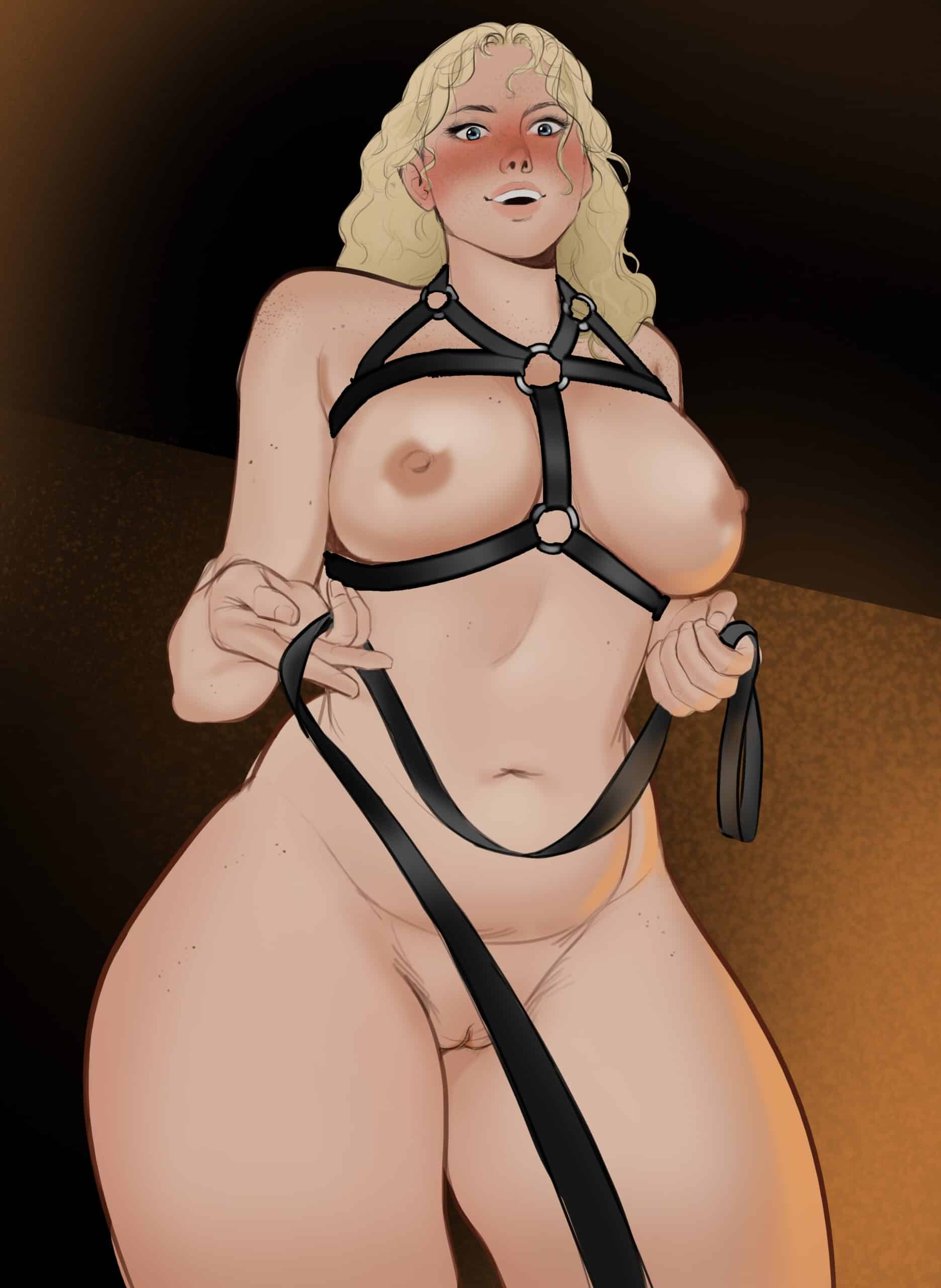
Photo: Smutty Rogue
The brat tamer is the dominant partner. Their job isn't to suppress the brat's personality — it's to match it with calm, unshakeable authority. A brat tamer who snaps in genuine anger has lost the game; the whole point is to stay two steps ahead.
Effective brat tamers share a few qualities: they genuinely enjoy the push-pull rather than finding it exhausting, they stay composed under provocation, and they know their brat well enough to read the difference between I want you to chase me and I'm actually overwhelmed.
Titles in the dynamic vary. Some brat tamers go by sir, mistress, daddy, or mommy — particularly when there's an ageplay element — while others prefer no title at all. Whatever the couple agrees on works.
How brat tamers respond
Brat tamers have a wide repertoire of responses, and the best ones calibrate tone as much as technique. Punishments might include:
- Impact play — spanking is the classic
- Bondage — restraining the brat to end the rebellion
- Forced orgasms or orgasm denial
- Cold-shoulder withdrawal — ignoring the brat until they behave
- Loss of privileges or favourite items
- Making the brat do chores or stand in the corner
The key is that punishments are agreed in advance, within the dynamic's negotiated limits, and genuinely enjoyed by the brat — even if they're "suffered" theatrically in the scene.
How to explore a brat kink
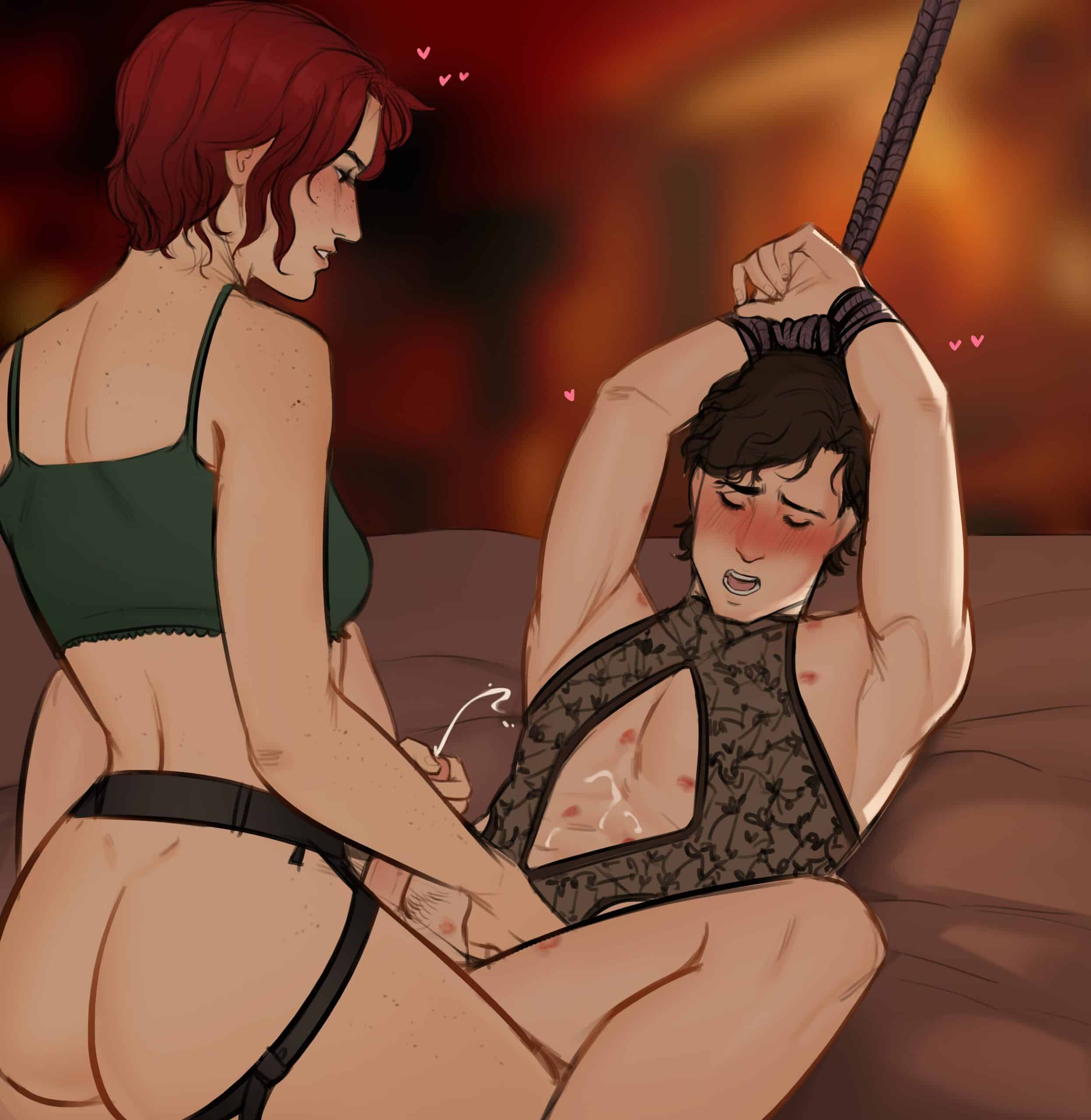
Photo: Smutty Rogue
1. Research before you play
Brat kink looks casual from the outside, but it's still a power-exchange dynamic with real emotional stakes. Read widely — articles, personal blogs, community forums, and first-person accounts from people who've been doing it for years. Understanding the mechanics before you step in will make the actual play more natural and safer.
2. Bring it up honestly
If your partner hasn't heard of brat play, expect the conversation to take time. Explain what appeals to you, what you've imagined, and why. Don't push for an answer on the spot. They may need to read about it, sit with it, and come back to you. That's entirely reasonable.
3. Negotiate everything beforehand
This is not optional. Before any scene, you need to discuss and agree on:
- Limits — what behaviours and punishments are in bounds, and what's never on the table
- A safeword — a word or gesture (a colour system works well) that pauses or ends play immediately, no questions asked, no matter how deep in the scene you are
- Tone and intensity — how serious do you want the dominant to be? How bratty can the sub get before it tips into genuine disrespect?
- Aftercare — what you both need once the scene ends
Consent is the architecture the whole thing rests on. Bratting can feel transgressive by design; it only works because both people have already agreed on exactly what game they're playing.
4. Start smaller than you think
First scenes rarely go the way you imagined. That's fine. Start with low-stakes moments — a mild refusal, a cheeky comment, a small act of disobedience — and see how both of you feel. Build from there. Escalating gradually lets both partners calibrate without anyone getting caught off-guard.
5. Tips for new brats
- Lead with your actual personality. If you're naturally cheeky, you probably already know how to brat — you've just been holding it back. Let it come out naturally rather than performing.
- It will feel weird at first. Most new brats feel self-conscious or silly early on. Push through it; that awkwardness fades fast once the dynamic clicks.
- Get creative over time. The longer you've been bratting, the more tools you develop. Vary your provocations. Keep your dominant guessing.
6. Tips for new brat tamers
- Match the energy, hold the composure. Your brat is being playful; be playful back, but never let them see you rattled.
- If you feel genuinely frustrated or angry, stop. A brat dynamic built on real irritation isn't fun for anyone. Frustration is a signal to call time, debrief, and figure out whether this dynamic fits both of you.
- Consistency matters. If your brat breaks a rule and nothing happens, the dynamic deflates. You don't need to be harsh, but you do need to follow through.
- Safety during physical punishment. If you're using impact play or bondage, have scissors on hand to cut any restraints quickly, never leave a restrained partner alone, and use protection during sex.
7. Aftercare
Every BDSM scene — even a light, playful one — ends with aftercare. That might be cuddling, talking, having a drink of water, or simply sitting together quietly until the scene fades. Discuss what you each need before you play, not after. Use the time to check in: what worked, what didn't, what you want more of next time. Good aftercare after a brat scene often feels like coming up for air together — relief, warmth, and the satisfaction of having played the game well.
For a full breakdown, see our guide to aftercare.
Common misconceptions about brat kink
"Brats aren't real submissives." This comes up often, including within some BDSM communities. It's worth taking seriously and then setting aside. Submission isn't one thing. A brat has consented to a power dynamic, hands ultimate control to their dominant, and functions within that structure — they just do it with attitude. That's still submission; it just has a different texture.
"Brats and littles are the same thing." There's genuine overlap — ageplay brats exist — but the roles aren't synonymous. Littles regress to a childlike headspace; brats resist their dominant's authority. A person can be both, or either, or neither.
"The goal is to 'break' the brat." The idea of "breaking" a submissive circulates in some corners of the BDSM community and should be treated with suspicion. It tends to mean pushing past limits, eroding self-expression, or crossing negotiated lines. None of that is what brat kink is. The brat tamer disciplines and teases — they don't dismantle.
"It always involves sex." Brat dynamics can be entirely non-sexual. Some couples run a brat/tamer dynamic as a relationship structure with no sexual component at all; others integrate it only during explicit scenes. Both are valid.
Is brat kink normal?
Yes. Playful power exchange — including deliberately testing a dominant partner — is a widely reported kink pattern, and one that fits comfortably within the consensual BDSM framework documented and discussed by researchers at the Kinsey Institute. It requires negotiation, communication, and ongoing consent, exactly like any other BDSM dynamic. When all of that is in place, there is nothing pathological, deviant, or harmful about it.
Any kink, brat play included, is healthy when it's consensual, mutually enjoyable, and conducted with the care both partners deserve.
Brat kink isn't about being difficult — it's about trusting someone enough to show them exactly how much trouble you can be, and knowing they'll love you for it.
— Ann-Marie D'Arcy-Sharpe
Ready to see where brat kink fits in the larger map of your desires? Take the 2-minute Kink Quiz →