Kink and queer male culture are so intertwined they're nearly impossible to separate — from the leather bars of the 1970s to today's online communities, gay men have always pushed the boundaries of sexual expression. And the result is one of the richest, most varied kink traditions on earth.
This guide covers what gay BDSM actually means, the most popular kinks in queer male spaces, how to get started safely, and where to go next if you want to explore further.
What is gay BDSM?
Gay BDSM is the practice of bondage, discipline, dominance and submission, sadism and masochism — and everything in between — between men (and, more broadly, people in queer male spaces). It encompasses a wide spectrum: from the gentle thrill of restraint to structured Dom/sub dynamics to intense sensation play.
BDSM is not a single act; it's an umbrella sitting over dozens of practices within BDSM culture. What ties them together is consent, communication, and the intentional use of power dynamics as a source of pleasure. Many people who explore gay BDSM identify a role — dominant, submissive, or switch — though roles are fluid and personal.
Why kink runs so deep in queer male culture
The link between gay identity and kink is not accidental. Queer men have historically occupied spaces "outside the norm," which lowers the threshold for questioning other norms — including sexual ones. Organizations like the National Coalition for Sexual Freedom (NCSF) have documented how kink communities, especially queer ones, developed rich safety frameworks precisely because mainstream institutions weren't available to them.
There's also the dimension of community. Leather bars, pride events, and online spaces became places to explore identity as much as sexuality. The kink and the queerness inform each other.
None of this means every gay man is kinky — individual desire varies enormously. But it does mean queer male kink culture has deep roots, a serious vocabulary, and a lot of accumulated wisdom to offer anyone curious about it.
The most popular gay kinks

1. Bondage
Bondage — the "B" in BDSM — means consensually restraining a partner, or being restrained yourself. Ropes, cuffs, ties, and bondage tape are all common tools. The appeal is layered: the person being restrained experiences heightened vulnerability and sensation; the person holding the restraints holds a kind of sacred responsibility.
Start slow. Beginners often start with simple wrist cuffs before moving to rope. Never leave a restrained person alone, and always keep medical scissors nearby when using rope or tape. Mixing bondage with temperature play — ice, warm wax from a skin-safe candle — is a classic escalation.
More: Bondage
2. Dominance and submission
At the core of most gay BDSM is a D/s dynamic: one person takes the dominant role ("Dom" or "Sir"), the other the submissive ("sub" or "boy"). This power exchange can be physical, verbal, or purely psychological — commanding, being commanded, kneeling, edging, serving.
The D/s dynamic can exist for the duration of a single scene or as an ongoing relationship structure. Either way, it requires explicit negotiation and a safeword both parties understand and respect.
More: Dominance | Submission
3. Impact play
Spanking is where most people start — a swat on the ass during sex that turns into something you start planning around. Impact play covers any consensual striking: spanking, paddling, flogging, and caning. The physical sensation triggers an endorphin response that many people describe as euphoric.
Technique matters. Never strike the lower back (kidneys), tailbone, or back of the knees. Fleshy areas — the upper back, buttocks, thighs — are safer targets. Start with lower intensity and check in verbally throughout.
More: Impact Play
4. Leather and gear

Leather carries enormous cultural weight in queer male spaces. Whether it's the smell, the weight, the look of a harness — leather functions as both fetish object and community identity marker. The Leather Pride flag, the annual leather events in major cities, the Old Guard vs. New Guard traditions — leather is a world unto itself.
A leather fetish can mean wanting to wear it, wanting your partner to wear it, or simply being aroused by its presence. Harnesses in particular have crossed from kink into mainstream gay fashion, but their roots are firmly in BDSM play.
5. Puppy play
Puppy play is a form of roleplay in which one person takes on the persona of a dog (the "pup") and another takes the role of handler or owner. It can be purely psychological or involve gear: pup hoods, mitts, harnesses, and tails.
For many, puppy play is less about sex and more about headspace — the pup persona allows a kind of release from adult responsibility and a return to instinctual response. For others it's deeply erotic. The community is one of the most visible and organized within gay kink spaces.
More: Roleplay
6. Humiliation and degradation
Consensual humiliation occupies a fascinating psychological space — being called names, belittled, or put in embarrassing situations by a partner you trust produces arousal precisely because the "shame" is controlled and chosen. In gay BDSM contexts this might mean being called a "good boy," ordered around, or exposed to ritualized mockery.
The key word is consensual. Discuss limits thoroughly before introducing degradation. Negotiate specific language and scenarios — what feels hot in the abstract can land differently in the moment, and clear communication prevents harm.
7. Ageplay and the Daddy dynamic
The "Daddy/boy" dynamic — one partner taking the dominant, nurturing "Daddy" role and the other the younger, submissive "boy" — is one of the most distinctive features of gay kink culture. It's a power exchange layered with care and often intense emotional intimacy.
Ageplay in adult male spaces involves adults choosing to embody age-coded roles for mutual erotic and emotional fulfillment. No one in consensual ageplay is anyone's actual parent or child; the roles are a costume for psychological exploration.
8. Foot worship
Foot fetishes are among the most common kinks overall, and they feature heavily in gay BDSM dynamics as an extension of service and submission. Foot worship can involve massaging, kissing, licking, or simply being near a dominant partner's feet.

In a D/s context, foot worship is often a ritual of deference — the sub at the Dom's feet is a physical expression of the power dynamic. Outside of structured kink, it's simply a pleasure that many gay men share with no further label needed.
9. Watersports
Also called golden showers or urophilia, watersports means deriving sexual pleasure from urine — whether that's being urinated on, urinating on a partner, or watching. It's a relatively common gay kink.
Health note: urine from a healthy person is largely sterile, but cross-contamination risks exist, especially if one person has an STI. Avoid contact with mucous membranes and open cuts. For accurate safer-sex guidance, see Planned Parenthood.
10. Suspension bondage
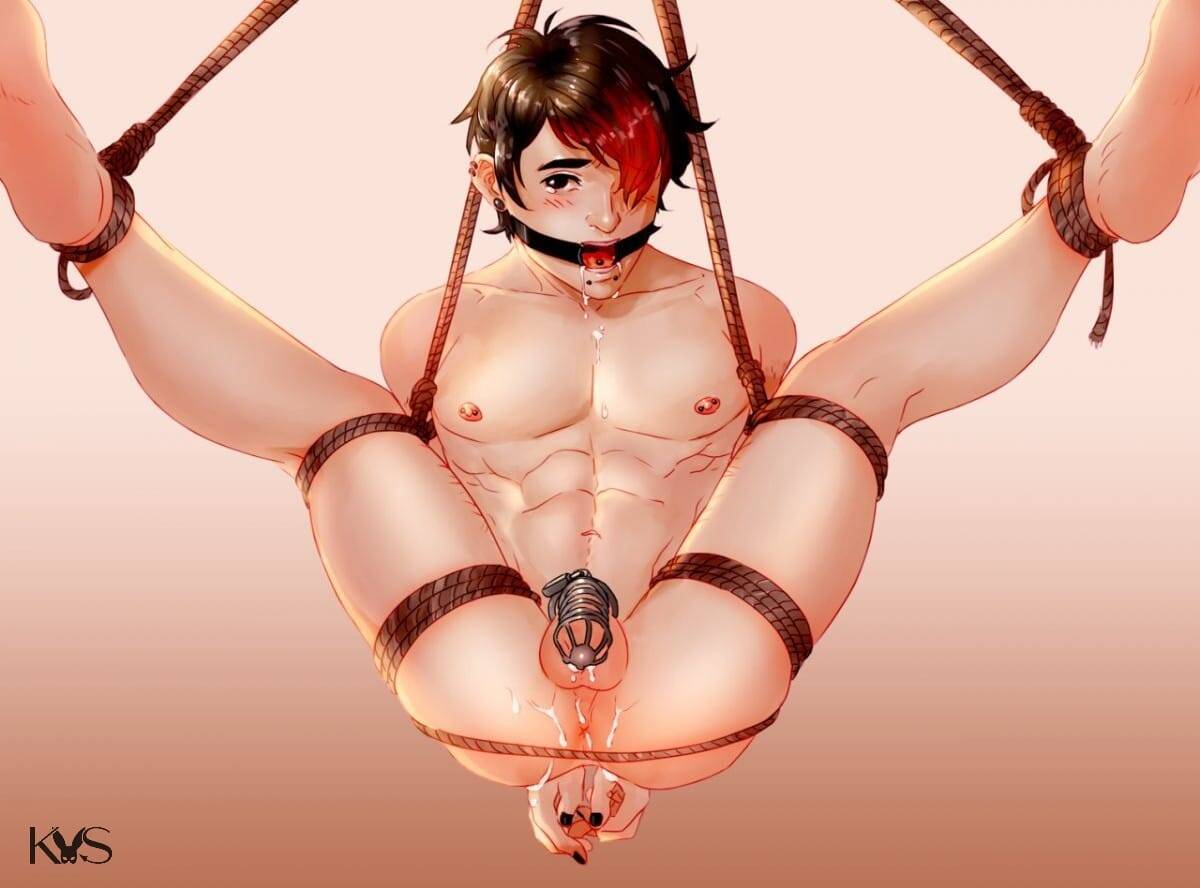
Suspension — hanging a partner fully or partially off the ground using rope or specialized rigging — is one of the most visually striking practices in gay BDSM. It is also one of the highest-risk.
Nerve compression, circulation loss, and the danger of a fall make suspension a practice that should only be attempted after serious training. Attend a workshop, learn from an experienced rigger in person, and never attempt suspension without a spotter. This is a practice where doing your research before you do anything else is not optional — it's essential.
11. Cuckolding and group dynamics
Cuckolding — in its kink-community sense — means deriving pleasure from watching or knowing your partner is sexual with someone else. In gay male spaces this often intersects with open relationship structures, where the "cuck" role can carry either submissive or simply voyeuristic energy.
Group sex, watching, and exhibitionism all sit nearby on the same spectrum and are common in gay kink communities.
12. Breath play
Erotic asphyxiation — controlling or restricting a partner's breathing — is sought for the intense physiological and psychological effect at the edge of the body's alarm response.
This is the highest-risk practice on this list. Oxygen deprivation can cause loss of consciousness, cardiac events, and death without warning. There is no way to do breath play that eliminates risk. Anyone who explores it should research harm reduction thoroughly with sources like the NCSF and accept that some risk remains.
Is gay BDSM normal?
Unequivocally, yes. Kink is not a disorder, a red flag, or something that needs explaining away. The Kinsey Institute has studied sexual diversity extensively and consistently finds that people with kink interests are, as a population, mentally healthy — often with strong communication skills and high levels of trust with partners.
What matters is consent, communication, and care for everyone involved. As long as those conditions hold, exploring gay BDSM is a healthy, legitimate dimension of sexual life.
What makes gay kink culture genuinely different is the weight of community behind it — generations of people who had to be honest about desire because hiding it was no longer an option.
— Ann-Marie D'Arcy-Sharpe
How to explore gay BDSM safely
- Research before you play. Read about any new practice before you try it — understand the risks, the technique, and the aftercare involved.
- Negotiate explicitly. Agree on roles, limits, and safewords before any scene begins. "Let's just see what happens" is not a framework — it's an invitation to misunderstanding.
- Use a safeword. Pick one that's memorable and unmistakable ("red" is the kink community standard). Either person can use it at any time to stop everything immediately, no questions asked.
- Start slower than you think you need to. Intensity escalates; it doesn't de-escalate easily. Build trust and familiarity before going deeper.
- Practice aftercare. After a scene — especially one involving emotional intensity, pain, or restraint — take time to reconnect. Blankets, water, physical closeness, verbal reassurance. See our aftercare guide for specifics.
- Use protection. Condoms and other safer-sex practices reduce STI risk during kink play just as in any other sex. See Planned Parenthood's safer-sex guidance for up-to-date information.
- Never leave a restrained person alone. Full stop.
- Know which practices require training. Rope bondage, suspension, and breath play all have real injury or death risk. Learn from experienced educators before attempting them.
- Find community. Munch events (low-key social meetups), online forums, and kink-aware organizations like the NCSF are excellent resources for new and experienced practitioners alike.
Where to go next
Knowing the names is just the start. If you want to understand where you personally sit — which dynamics pull you, which practices genuinely interest you — the best next step is to spend some honest time with your own reactions.
Related: Same-sex play also spans lesbian sex.
Not sure where you land? Take the 2-minute Kink Quiz →
If a specific practice caught your attention, the BDSM hub is a good entry point, or jump straight to the guides on bondage, impact play, or dominance.